


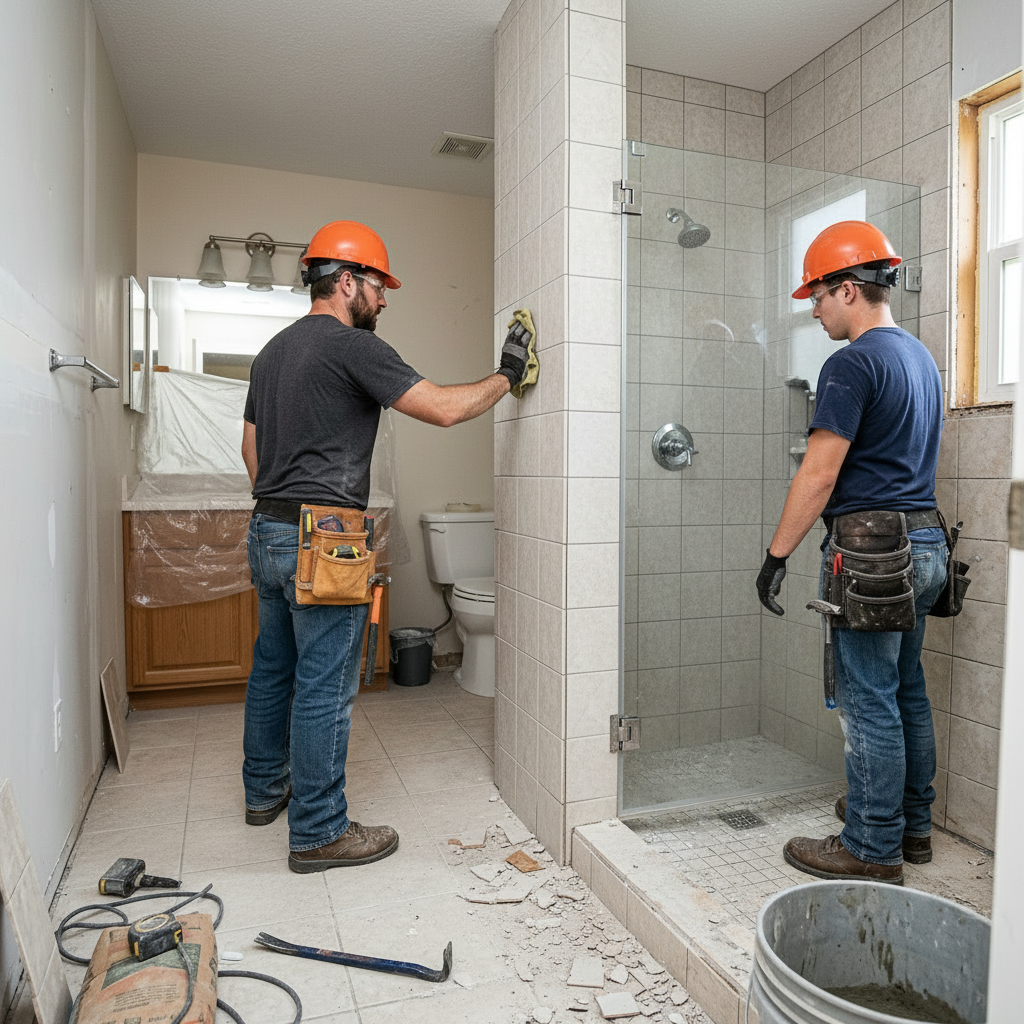
Last updated: May 23, 2026
Converting a bathtub to a walk-in shower typically costs between $1,200 and $8,000, with most homeowners spending around $3,000–$4,500 for a standard mid-range job. High-end tile work with a custom frameless enclosure can push costs to $10,000 or more.
The wide price range comes down to five key variables: the size of the space, whether you're doing a simple liner swap or a full gut-and-rebuild, your choice of materials, local labor rates in your area, and permits.
This guide breaks down every cost factor so you can budget accurately before calling a contractor.
→ See also:How Much Does a Walk-In Shower Installation Cost? — full price guide for new shower builds.
Average Tub-to-Shower Conversion Cost in 2026
| Conversion Type | Low End | Typical Range | High End |
|---|---|---|---|
| Shower insert/liner kit | $1,200 | $1,500–$2,500 | $3,000 |
| Prefab shower unit (full removal) | $1,800 | $2,500–$4,000 | $5,500 |
| Custom tile shower (full removal) | $3,500 | $4,500–$7,000 | $12,000+ |
| Walk-in shower with glass enclosure | $4,000 | $5,500–$9,000 | $15,000 |
| Accessibility/barrier-free conversion | $3,000 | $4,000–$7,500 | $12,000 |
Prices reflect 2026 national averages. Costs vary by region — expect 15–30% higher in major metros (New York, San Francisco, Boston).
What's Included in the Cost?
A typical conversion project involves several distinct cost components. Here's how the budget usually breaks down for a mid-range tile shower replacement ($4,500 total):
| Cost Component | Typical Share | Amount |
|---|---|---|
| Labor (demolition + installation) | 40–50% | $1,800–$2,250 |
| Shower pan/base | 10–15% | $450–$675 |
| Tile & grout | 12–18% | $540–$810 |
| Shower walls (tile or surround) | 10–15% | $450–$675 |
| Fixtures (valve, showerhead, drain) | 8–12% | $360–$540 |
| Glass door or enclosure | 8–15% | $360–$675 |
| Permits | 2–5% | $90–$225 |
Conversion Cost by Type
1. Shower Insert/Liner Kit — $1,200 to $3,000
The most budget-friendly option. A prefab acrylic or fiberglass insert drops directly into the existing tub footprint. No demolition needed.
What you get:
Keeps original plumbing in place (no replumbing cost)
One-day installation
Low-maintenance surface
Limitations:
Still looks like a tub shape
Not a true walk-in shower experience
Threshold remains (not barrier-free)
Best for: rental units, tight budgets, quick turnarounds.
2. Prefab Shower Unit (Full Tub Removal) — $1,800 to $5,500
Completely remove the tub and install a one-piece or multi-piece prefab shower pan with wall surrounds. Alcove tub spaces (the most common U.S. bathroom layout) convert cleanly.
What's included:
Tub demolition and haul-away: $200–$600
New prefab shower pan (32"×32" to 36"×60"): $300–$1,200
Acrylic/fiberglass wall surround: $200–$800
New shower valve and plumbing: $400–$800
Labor: $600–$1,800
Popular prefab brands: American Standard, Delta, Kohler, MAAX.
3. Custom Tile Walk-In Shower — $3,500 to $12,000+
The most popular upgrade. Tile everything — floor, walls, ceiling — for a fully custom look. Requires a waterproofing membrane, cement board substrate, and professional tile work.
Cost breakdown:
Demo: $300–$800
Waterproofing system (Schluter Kerdi, RedGard): $150–$400
Tile (floor + walls, per sq ft): $5–$25 materials + $8–$15 labor
Shower niche: $200–$600
Linear drain: $150–$400
Frameless glass door/panel: $600–$2,500
Fixtures (rain head, handheld, valve): $300–$1,200
Tile size affects price significantly: 12×24 large-format tiles cost more to install than 4×4 subway tiles due to precision cutting and leveling time.
4. Walk-In Shower with Frameless Glass — $4,000 to $15,000
Add a frameless glass enclosure (semi-frameless or full frameless) to any custom tile build. This is the premium look seen in high-end home magazines.
| Glass Type | Cost Range |
|---|---|
| Framed sliding door | $300–$700 |
| Semi-frameless pivot door | $600–$1,200 |
| Frameless single-hinged door | $900–$2,000 |
| Frameless door + fixed panel | $1,200–$3,000 |
| Custom frameless enclosure (full surround) | $2,000–$5,000+ |
Glass options: clear, frosted, rain pattern, low-iron (ultra-clear). Thickness: 3/8" standard or 1/2" premium (+20–30% cost).
5. Barrier-Free/Accessibility Conversion — $3,000 to $12,000
Converting to a zero-threshold, ADA-compliant walk-in shower is the most involved type, often requiring floor demolition to lower the drain and reframe the subfloor.
Additional costs vs. standard conversion:
Linear floor drain system: $400–$1,000
Subfloor modification: $500–$2,000
Grab bars (2–3 bars): $100–$400 installed
Built-in shower seat: $300–$900
Handheld showerhead: $100–$400
Who needs this? Seniors aging in place, people with mobility limitations, or homeowners planning ahead. Barrier-free showers also command a premium at resale.
Key Factors That Affect Your Cost
1. Size of the Space
Most U.S. tubs are 60" × 30". The shower you build in that footprint determines cost dramatically:
| Shower Footprint | Relative Cost |
|---|---|
| 36"×36" (smaller than tub) | Cheapest — fewer tiles |
| 36"×60" (same as tub length) | Standard |
| 42"×60" or larger (wall expansion) | +$1,500–$4,000 for framing/drywall |
Expanding the shower beyond the tub footprint requires moving walls — a major cost jump.
2. Plumbing Condition and Relocation
Plumbing stays in place: $0–$300 for a new valve and trim
Moving drain: $500–$1,500
Moving supply lines: $300–$800
Old galvanized pipes discovered during demo: +$500–$2,500 to repipe
Older homes (pre-1970s): Budget for plumbing surprises. Lead pipes, galvanized steel, and cast iron waste lines are common findings.
3. Tile Selection
| Tile Type | Material Cost (per sq ft) |
|---|---|
| Ceramic subway tile | $1.50–$4 |
| Porcelain (standard) | $3–$8 |
| Large-format porcelain (12×24, 24×48) | $5–$15 |
| Natural stone (travertine, slate) | $7–$20 |
| Marble | $15–$40 |
| Glass tile | $8–$25 |
Labor adds $8–$15/sq ft on top of material cost. A 60 sq ft shower (walls + floor) in porcelain = $1,040–$2,700 in tile alone.
4. Local Labor Rates
Tile setters and plumbers command very different rates by region:
| Region | Tile Labor (per sq ft) | Plumber (per hour) |
|---|---|---|
| Midwest / Southeast | $7–$11 | $75–$100 |
| Southwest | $8–$12 | $85–$120 |
| Northeast | $12–$18 | $120–$175 |
| Pacific Coast | $13–$20 | $130–$200 |
5. Permits
Most municipalities require a permit for tub-to-shower conversions that involve plumbing changes. Permit costs:
Simple remodel (no plumbing move): $0–$150 in many areas
Plumbing permit: $75–$300
Full renovation permit: $150–$500
Skipping permits is risky. Unpermitted work can complicate home sales and void homeowner's insurance claims.
DIY vs. Professional Cost Comparison
| Task | DIY Cost | Pro Cost | DIY Savings |
|---|---|---|---|
| Tub demolition & haul | $50–$100 (rental tools) | $300–$600 | $200–$500 |
| Cement board installation | $150–$300 materials | $400–$800 | $250–$500 |
| Waterproofing membrane | $100–$250 materials | $250–$600 | $150–$350 |
| Tile installation | $500–$1,500 materials | $1,500–$4,000 | $1,000–$2,500 |
| Shower valve/plumbing | Not recommended | $400–$1,200 | — |
| Glass door install | $300–$800 materials | $600–$1,500 | $300–$700 |
Total DIY potential savings: $1,900–$4,550
DIY risks to weigh:
Improper waterproofing = mold, structural damage within 2–5 years
Tile lippage on large-format tiles requires precision that takes experience to get right
Plumbing work in most states requires a licensed plumber — pulling your own permit is legal in some states if you're the homeowner.
Bottom line: Demolition and cement board are good DIY tasks. Tile is manageable if you have experience. Waterproofing and plumbing should always be done by a licensed professional.
Is Converting a Tub to a Walk-In Shower Worth It?
Return on Investment
According to Remodeling Magazine's Cost vs. Value Report data, a bathroom remodel recoups approximately 60–70% of project cost at resale nationally.
However, there's an important caveat: if you remove the only bathtub in a home, real estate agents consistently flag that as a negative for families with young children. Homes with no bathtub can sell for less or sit longer on the market.
Rule of thumb:
✅ Safe to convert: 2+ bathrooms, one still has a tub
⚠️ Risky to convert: Only bathroom in the home
✅ Strong ROI: Master bathroom conversion in a 3+ bed home
Quality of Life Value
Beyond ROI, homeowners who convert report high satisfaction:
Easier entry/exit (especially for seniors)
Easier to clean than a tub surround
More visual space in the bathroom
Clean, contemporary aesthetic
How Long Does the Conversion Take?
| Project Scope | Timeline |
|---|---|
| Shower liner insert (no demo) | 1 day |
| Prefab shower unit (with demo) | 2–4 days |
| Tile shower (standard, pro crew) | 5–10 days |
| Custom tile + frameless glass | 10–14 days |
| Barrier-free (floor modification) | 14–21 days |
Note: Tile requires 24–48 hours of drying time between setting and grouting, and another 24–72 hours before use after caulking. This adds to the total calendar time even if labor hours are fewer.
How to Save Money on Your Conversion
1. Keep plumbing in the same location. Moving the drain or supply lines adds $800–$2,500. Design your shower around the existing rough-in.
2. Choose porcelain over natural stone. Porcelain large-format tile delivers a near-identical look to marble at 60–70% less cost.
3. Use a prefab shower base instead of a mud-set tile floor. A solid surface shower pan ($200–$500) is faster, easier, and waterproof by default. Reserve the tile work for walls only.
4. Get 3 quotes minimum. Tile labor varies by 40–60% between contractors in the same market. Always compare.
5. Time your project. January–March is off-season for bath remodelers in most U.S. markets — contractors may offer 10–15% discounts to fill their schedule.
6. Supply your own fixtures. Buy your showerhead, valve, and drain through a plumbing supply house or big-box store, then pay your plumber just for installation labor.
Walk-In Shower Conversion Cost by State (2026 Estimates)
---
| State | Low | Average | High |
|---|---|---|---|
| Texas | $1,400 | $3,200 | $7,500 |
| Florida | $1,500 | $3,400 | $8,000 |
| Georgia | $1,300 | $3,000 | $7,000 |
| Arizona | $1,400 | $3,100 | $7,500 |
| Ohio | $1,200 | $2,800 | $6,500 |
| Illinois | $1,800 | $4,000 | $9,000 |
| Pennsylvania | $1,700 | $3,800 | $8,500 |
| New York | $2,500 | $5,500 | $12,000 |
| California | $2,800 | $6,000 | $14,000 |
| Washington | $2,200 | $4,800 | $11,000 |
Finding the Right Contractor
For a tub-to-shower conversion, you'll typically need:
General contractor or bath remodeler — for full-service projects
Tile contractor — if managing subcontractors yourself
Licensed plumber — required in most states for drain relocation or valve work
Glass company — for frameless enclosures (often subcontracted by GC)
Red flags when hiring:
Quotes significantly below all others (often means cutting waterproofing steps)
No license or insurance in a state that requires it
Demands a large cash deposit (>30%) before work starts
Won't pull a permit
Pro tip: Ask contractors to walk you through their waterproofing method before hiring. The difference between a $400 and $1,200 tile job is often just the quality of the waterproofing system underneath.
Frequently Asked Questions
How much does it cost to convert a tub to a walk-in shower? Most conversions cost $1,200–$8,000, depending on scope. A basic liner insert runs $1,200–$2,500. A full custom tile shower with frameless glass costs $5,000–$10,000+. The national average for a mid-range project is $3,000–$4,500 in 2026.
Can I convert a tub to a shower in one day? Only with a drop-in shower liner insert, which installs over the existing tub. Full conversions with tile take 5–14 days, including demo, waterproofing, tile setting, grouting, and curing time.
Do I need a permit to convert a tub to a shower? In most cases, yes. If any plumbing is being changed, a permit is required. It costs $75–$300 and is required in most U.S. jurisdictions. Check with your local building department. Simple cosmetic work (liner insert, no plumbing changes) often doesn't need a permit.
Will removing my only bathtub hurt my home's resale value? Potentially, yes. Families with young children specifically look for at least one bathtub in a home. If yours is the only bathroom or the only tub, converting could reduce your buyer pool. If you have two or more bathrooms, keeping a tub in one is the recommended strategy.
How long does a tub-to-shower conversion last? A professionally installed tile shower with proper waterproofing lasts 20–30+ years. A prefab acrylic insert typically lasts 10–15 years before showing wear. Quality of the waterproofing membrane is the single biggest factor in longevity.
Is it cheaper to install a walk-in shower or keep the tub? If you're remodeling anyway, a prefab walk-in shower costs roughly the same as a prefab tub replacement ($1,500–$3,500). A custom tile shower costs significantly more ($4,000+). If your existing tub is in good shape, keeping it is by far the cheapest option.
What size walk-in shower should I build in a tub alcove? Standard U.S. alcove tubs are 60"×30". You can build a 36"×60" or 32"×60" shower in that space without moving any walls, which maximizes the floor space and avoids structural work costs.
Budget Planning Checklist
Before calling contractors, nail down:
Confirm bathroom layout — alcove, corner, or freestanding tub?
Decide on tile vs. prefab — impacts budget by $2,000–$6,000
Decide on door type — framed vs. frameless
Check if the drain needs to be moved
Verify which bathroom has the tub (only one? two+?)
Contact the local building department about permit requirements
Set aside 15% contingency for plumbing surprises